The High Cost of the "Wait and See" Approach
For decades, many industrial operations across the Canadian Prairies have operated on a simple principle: if it isn’t broken, don’t fix it. However, in 2026, that “reactive” mindset has become a significant financial liability. Whether you are managing a potash mine in Saskatchewan or a high-throughput grain terminal in Manitoba, the math of a breakdown has changed.
The true cost of a mechanical failure today isn’t just the invoice for the repair; it is the cascading downtime, the overtime premiums for emergency crews, and the opportunity cost of lost production during peak cycles. For the modern plant manager, the goal is no longer just “repairing” equipment—it is eliminating the surprise of failure through predictive automation and precision millwrighting.
The Mechanical-Digital Bridge: Millwrights in the Age of Automation
Automation is often discussed as a software or electrical challenge, but on the plant floor, automation is a physical reality. A sensor can detect a misalignment, and a PLC can flag a high-temperature bearing, but those digital warnings require a physical solution.
At Custom Millwright Services, we see ourselves as the “hands” for the “brains” of your automation. Modern millwrighting in 2026 involves:
- Precision Alignment: Using laser tools to ensure that automated high-speed shafts are aligned within microns to prevent sensor-triggered shutdowns.
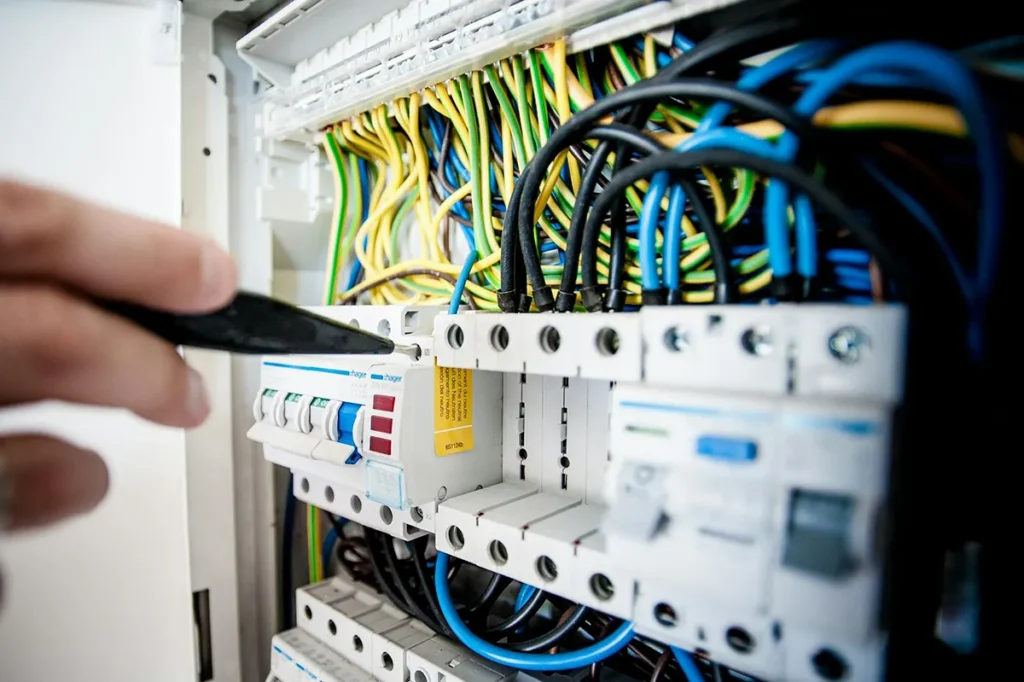
- Integrated Systems: Working alongside industrial electricians to ensure that mechanical hardware doesn’t just “fit,” but integrates seamlessly with the automated controls that govern your production line.
Listening to the Machine: Vibration and Thermal Analysis
One of the most valuable tools for a plant manager is the ability to “see” into the future of a machine’s health. Predictive maintenance relies on non-invasive diagnostics that catch failures weeks or months before they occur.
- Vibration Analysis: By monitoring the “shiver” of a motor or gearbox, our millwrights can identify imbalance, looseness, or bearing wear while the machine is still running.
- Thermal Imaging: Detecting hotspots in mechanical assemblies often reveals friction issues or lubrication failures that are invisible to the naked eye but are precursors to a catastrophic seizure.
The ROI of the Scheduled Swap
Consider a hypothetical scenario: A remote milling facility catches a bearing defect in March during a routine Shop Talk audit. The repair is scheduled for a Tuesday morning, takes four hours, and uses standard-rate labour.
Contrast that with a reactive failure in the middle of a October harvest rush. The bearing seizes, damaging the shaft. The plant goes dark for 48 hours. You are paying emergency mobilization fees, expedited shipping for parts, and losing thousands of dollars every hour the line is silent.
Predictive maintenance isn’t a cost—it’s an insurance policy with a guaranteed return on investment.
Moving Toward a "Zero-Downtime" Culture
Transitioning to a predictive model requires a partner who understands the specific rigors of the Prairie climate and the heavy-duty nature of ag and mining equipment. It’s about moving from a vendor-client relationship to a strategic partnership.
By choosing Custom Millwright Services, you aren’t just hiring someone to turn a wrench; you are gaining a team that prioritizes your uptime as much as you do. Our Red Seal millwrights are trained to look beyond the immediate fix to find the root cause of mechanical stress, ensuring that once a machine is back in service, it stays there.