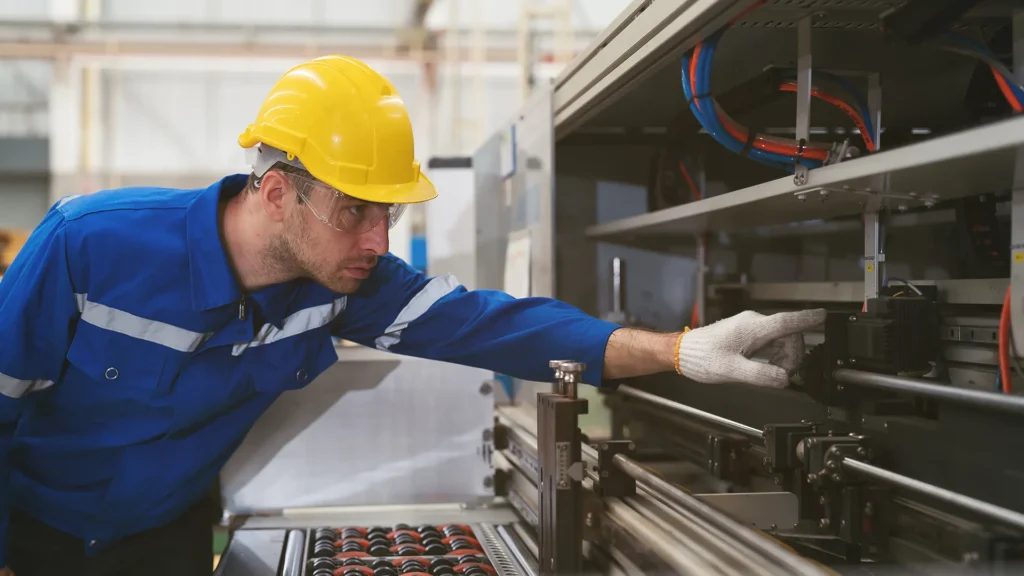
The Trade Most Essential Industries Depend On — And Most People Cannot Define
If you manage an industrial plant, a grain elevator, a processing facility, or a mining operation, you almost certainly depend on millwright work to keep your equipment running. Yet if you asked most managers outside the industry to define what a millwright actually does, you would get a mix of vague answers — “something with machines,” or “like a mechanic, right?”
Not quite. Millwrighting is a distinct Red Seal trade with a specific scope of work, a formal apprenticeship pathway, and a set of competencies that are not easily replicated by general mechanics or other tradespeople. Understanding what a millwright actually does helps you ask better questions, make better hiring decisions, and understand why the quality of your millwright contractor directly affects how long your equipment lasts.
The Technical Definition — In Plain Language
A millwright is a tradesperson who installs, maintains, repairs, and aligns industrial machinery and mechanical equipment. The scope of that definition is broad by design, because the machinery millwrights work on is diverse: conveyor systems, gearboxes, pumps, turbines, dryers, presses, augers, motors, compressors, and the structural and mechanical infrastructure that connects and supports all of it.
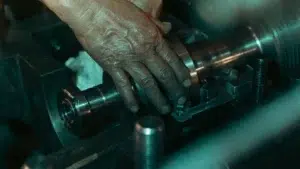
What makes millwrighting distinct from general mechanics is the emphasis on precision. A millwright is not simply replacing a worn part — they are restoring a machine to its engineered tolerances. Shaft alignment, for example, is not about eyeballing a coupling until it looks straight. It is a laser-guided measurement process that confirms alignment within thousandths of an inch, because even a minor misalignment accelerates bearing wear, increases vibration, and shortens equipment life in ways that compound over time.
What Millwrights Actually Do Day-to-Day
The day-to-day work of a millwright varies by industry and site, but generally includes:
- Equipment installation – setting new machinery on foundations, aligning shafts and couplings, connecting drive systems, and commissioning equipment to run within specification
- Preventive maintenance – scheduled inspections, lubrication, belt and chain tensioning, bearing monitoring, and alignment checks
- Breakdown repairs – diagnosing and repairing mechanical failures in operating facilities, often under significant time pressure
- Precision alignment – using dial indicators and laser tools to align rotating equipment to manufacturer specifications
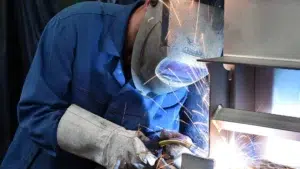
- Custom fabrication – designing and building replacement components, guards, brackets, and specialty parts when standard parts are unavailable or inadequate
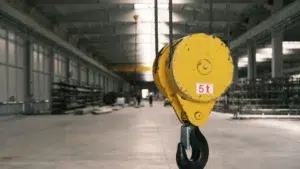
- Rigging and heavy lift – safely moving heavy machinery using cranes, hoists, and specialized rigging equipment
- Maintenance consultation – advising on equipment layout, maintenance strategy, and upgrade planning before problems develop
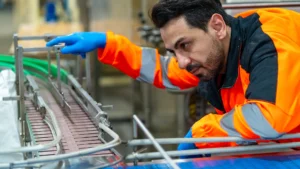
In agricultural operations, this work centers on grain handling systems, dryers, conveyors, and processing equipment. In industrial settings, it extends to manufacturing lines, mining equipment, and processing plant infrastructure across the full equipment lifecycle.
The Difference Between a Millwright and an Industrial Mechanic
Millwrights are trained to read and interpret mechanical drawings and engineering specifications, perform precision measurements, and make installation decisions that affect a machine’s long-term performance. Industrial mechanics generally focus on the repair and maintenance of already-installed equipment.
In practice, the distinction matters most when you are installing new equipment, retrofitting existing systems, or troubleshooting a chronic mechanical problem that has resisted routine repair. Those are millwright-scope challenges.
What Red Seal Certification Means
In Canada, the Red Seal certification (Interprovincial Standards Program) is the national credential for skilled trades. A Red Seal millwright has completed a formal apprenticeship — typically 7,200 to 8,000 hours of documented work experience under a journeyperson — and passed a standardized interprovincial examination.
The Red Seal designation confirms that a millwright can perform the full scope of the trade to a nationally recognized standard, regardless of which province they trained in. For any operation where the quality and safety of mechanical work carries real consequences, Red Seal certification is the baseline you should expect.
At Custom Millwright Services, our crews include Red Seal certified millwrights and industrial mechanics with field extensive experience across Saskatchewan, Alberta, and Manitoba — in grain handling, industrial manufacturing, feedmill operations, and more.
Why It Matters Who Does Your Millwright Work
Millwright work is not a commodity. The alignment of a gearbox, the installation of a bearing, the fabrication of a custom bracket — each of these tasks done well extends equipment life. Each one done poorly accelerates the next failure.
Choosing a millwright company is choosing the people who set the baseline for how long your equipment runs, how often it fails, and what your maintenance program actually costs over time.
The right millwright does not just fix what is broken. They make sure it stays fixed.