The Problem With Standard in a Non-Standard World
Original manufacturers stop making parts. Dealers go out of business. Equipment gets retrofitted with components it was never designed to accept. Facilities built for one production volume get pushed to twice that capacity. And somewhere in the middle of all of that, a standard replacement part — the kind that fits the catalog number and ships from a warehouse — no longer fits what you actually have. This is not an edge case in Saskatchewan’s industrial and agricultural sector. It is the norm.
What Custom Industrial Fabrication Actually Means
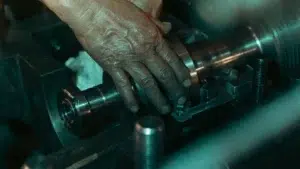
Custom fabrication is the process of designing and manufacturing a mechanical component to fit specific operational requirements, rather than purchasing a standard part from a catalog. It is precision work: measuring the actual equipment, engineering a solution to the actual problem, and building a part that fits correctly the first time.
At Custom Millwright Services, our fabrication capability covers the practical range of what Prairie industrial and agricultural facilities actually need:
- Custom brackets and mounts – for non-standard equipment positioning, retrofit installations, or modified structures that no catalog part was designed to fit
- Replacement shafts and couplings – machined to the actual tolerances of your equipment when OEM parts are discontinued or unavailable
- Guards and safety enclosures – built to fit the actual geometry of modified or non-standard equipment
- Wear components – liners, plates, and protective surfaces manufactured to match your specific abrasion and impact conditions
- Specialty structural components – catwalks, platforms, supports, and frames fabricated to your facility’s actual dimensions
- Custom conveyor and auger components – flights, troughs, and drive components manufactured to non-standard specifications
The Real Cost of Making a Standard Part "Work"
When a replacement component does not match the original engineering specifications of the equipment it replaces, the machine is operating in a misaligned state from the moment it starts running again. Misalignment accelerates bearing wear. It increases vibration. It stresses welds, fasteners, and adjacent components that were not designed to absorb the extra load. It shortens the intervals between subsequent failures.
The standard part might cost less upfront. But the bearing it destroys, the shaft it scores, and the emergency repair call it eventually generates are all costs that trace back to the original substitution.
The cheapest part is not always the least expensive option when you account for the full maintenance cycle.
When Custom Fabrication Is the Right First Call
Legacy equipment with discontinued parts. The manufacturer stopped making it a decade ago. The aftermarket supplier closed. The part your machine needs does not exist in a catalog anymore — but it still needs to exist. Fabrication is not the workaround; it is the answer.
Modified or hybrid systems. Decades of operational adaptation mean that many Prairie facilities are running equipment that no longer matches any original engineering drawing. Custom fabrication bridges the gap between what the original spec said and what the system actually is.
Unique environmental or operational conditions. Standard parts are designed for standard conditions. Saskatchewan’s temperature extremes, abrasive grain dust, high-cycle seasonal operations, and the heavy-duty demands of Prairie industrial and ag applications are not always standard conditions. Components built specifically for your environment perform differently than catalog substitutes.
Faster turnaround than parts ordering. When a failure happens during harvest and the nearest replacement part is two weeks out on backorder, fabrication by a capable local shop can put you back in operation in days rather than weeks. In that scenario, custom is not the expensive option — it is the fast one.
What to Look for in a Custom Fabrication Partner
Not every millwright company has genuine fabrication capability, and there is a meaningful difference between a company that can perform light welding and one that can engineer and manufacture a precision mechanical component from a dimensional sketch or a failed part.
When evaluating a fabrication partner, look for:
- In-house machining and welding capability — not work that gets sent out to a third party
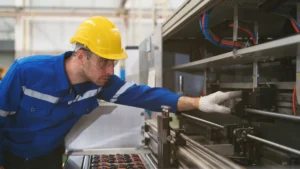
- Millwrights who can read engineering drawings and take accurate dimensional measurements from existing equipment
- Experience fabricating components for equipment similar to yours — grain handling, processing, mining, or manufacturing
- The ability to work from a failed component, a hand sketch, or a formal engineering drawing, depending on what documentation you have available
At Custom Millwright Services, fabrication is not an add-on service — it is part of how we solve problems. When a standard part does not fit what you have, we build what does.