In many industrial settings, lubrication is viewed through a “more is better” lens. The sound of a squeaking bearing is met with a grease gun, and the task is considered finished once grease begins to purge from the seals. However, for a facility manager or business owner, this approach is a recipe for premature component failure and wasted capital.
True lubrication is a branch of science known as tribology. It is the study of interacting surfaces in relative motion. When a millwright manages your lubrication program, they aren’t just “oiling parts”—they are managing the microscopic film of fluid that prevents metal-on-metal destruction.
The Physics of the Film: Understanding Viscosity
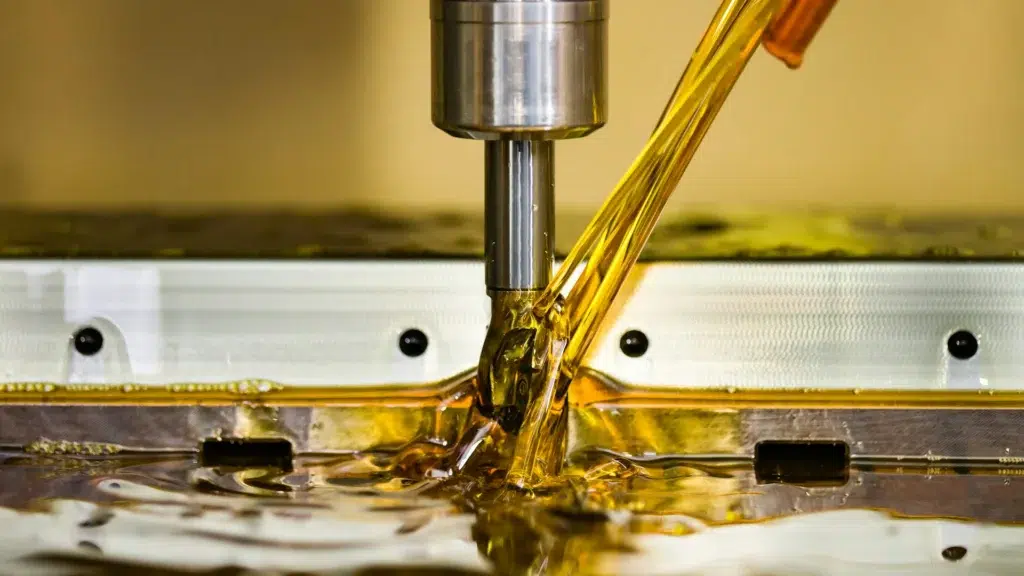
The most critical property of any lubricant is its viscosity—the measure of its resistance to flow. For a manager, it is helpful to think of viscosity as the “strength” of the lubricant’s protective wall.
The relationship between the force required to move a fluid (shear stress) and the rate at which it moves is described by Newton’s Law of Viscosity (for those who enjoy a little math!):
The Manager’s Takeaway
If the viscosity ($\eta$) is too low for the load, the film collapses, and the parts touch. If the viscosity is too high, the motor has to work harder to “churn” the thick fluid, leading to the Power Loss we discussed in previous articles. A professional millwright selects a lubricant where the viscosity is optimized for the specific operating speed and load of your specific equipment.
The Stribeck Curve: Why "Startup" is the Most Dangerous Time
Most bearing wear does not happen while a machine is running at full speed; it happens during the “handshake” between stationary and moving states. This is illustrated by the Stribeck Curve, which identifies three regimes of lubrication:
- Boundary Lubrication: The surfaces are in physical contact (Start/Stop).
- Mixed Lubrication: A partial film exists, but peaks of the metal still touch.
- Hydrodynamic Lubrication: The surfaces are completely separated by a fluid film (The Goal).
The objective of a technical maintenance program is to get the machine into the Hydrodynamic regime as quickly as possible. This requires precise lubricant selection based on the Viscosity Index (VI)—a measure of how much the lubricant thins out as it gets hot.
The Prairie Winter Factor: Temperature and Fluidity
For businesses operating in Western Canada, the Viscosity Index is a critical business variable. A lubricant that performs perfectly in a 20°C shop may become as thick as peanut butter at -30°C in an unheated grain elevator or outdoor conveyor system.
When a lubricant is too cold, it cannot reach the internal “rolling elements” of a bearing during the first few minutes of operation. This leads to skidding, where the balls inside the bearing slide rather than roll, creating flat spots that eventually lead to catastrophic failure.
Technical Strategy
- Synthetic vs. Mineral: We often recommend high-performance synthetics for outdoor applications because they have a higher VI, meaning they stay fluid in the winter while maintaining their “wall strength” in the summer heat.
The Danger of Over-Lubrication: Pressure and Heat
One of the most common “hand-slap” moments in maintenance occurs when a well-meaning operator over-greases a bearing. This causes two technical failures that a manager should watch for:
- Seal Failure: Excess pressure from a grease gun (which can produce over 10,000 PSI) can physically blow out the internal seals, allowing contaminants like dust and moisture to enter.
- Churning Heat: If a bearing housing is 100% full of grease, there is no room for the grease to move. The bearing has to “fight” through the grease, which generates friction heat. This heat thins the lubricant, ironically causing the very wear you were trying to prevent.
Management Checklist: The "Clean, Cool, and Dry" Standard
To ensure your facility’s lubrication program is providing a return on investment, we suggest auditing these three “Technical Pillars”:
| The Pillar | The Technical Requirement | The Manager's Question |
|---|---|---|
| Clean | Contaminants (dust/silica) act like sandpaper in the oil film. | "Are we using dedicated, sealed containers for our oil transfers?" |
| Cool | Every 10°C rise in operating temp cuts oil life in half. | "Are we monitoring bearing temperatures during our weekly rounds?" |
| Dry | Water in oil causes "hydrogen embrittlement" in steel. | "Are our outdoor gearboxes properly vented and capped?" |
Lubrication as a Capital Strategy
Managing a high-volume facility requires more than just “keeping things running”; it requires protecting the integrity of your hardware. A professional millwright doesn’t just apply grease; they apply the science of tribology to ensure that your machines are operating in the most efficient regime possible.
By moving away from “scheduled” greasing (doing it every Friday) and toward “Condition-Based” lubrication (doing it based on run-hours, load, and temperature), you reduce your lubricant spend, lower your energy costs, and extend the life of your most expensive assets.
At Custom Millwright Services, we provide the mechanical literacy required to take the guesswork out of maintenance. We ensure that the “Shop Talk” in your facility is backed by the physics of reliability.
If you have questions, please do not hesitate to contact us.